Curly Girl Handbook: Classic Rules vs Modern Science-Based Approach
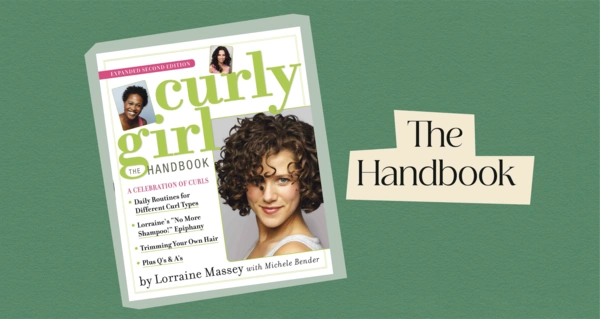
If you search for "Curly Girl Handbook," you'll typically find lists of rules: "forbidden" ingredients, fixed steps, and the idea that there's one correct way to care for curly hair.
The problem is that today, much of the community uses a more flexible version of the method. Additionally, cosmetic science and real-world experience with different scalps have led to many rules being better understood as principles.
In this article, we'll separate two "algorithms":
- Book CGM (handbook): Classic rules as they were popularized.
- Modern CGM: A practical approach more based on formulation, sufficient cleansing, and personalization.
What is the Curly Girl Method (CGM)?
The Curly Girl Method (CGM) is a way to care for curly hair focused on:
- Reducing damage (mechanical and thermal)
- Maintaining hydration
- Enhancing definition
Many guides inspired by the Curly Girl Handbook summarize CGM as a set of "don'ts":
- Don't brush dry hair
- Don't use direct heat or flat irons
- Don't use "harsh" shampoos (often: avoid sulfates)
- Don't use silicones, waxes/petrolatum (due to buildup)
The original goal was logical: most standard routines were designed for straight hair and tended to dry out or disrupt curl patterns.
Book CGM: Which Rules Usually Work (and Why)
Some parts of classic CGM tend to be useful for almost everyone because they're based on physics and hair behavior:
1) Less manipulation, more technique
- Detangling with conditioner on wet hair usually reduces breakage.
- Defining with holding products (for example, gel) can improve curl consistency.
2) Less heat, less accumulated damage
Avoiding frequent heat (or using it in a controlled way) usually translates to:
- Fewer split ends
- Less loss of definition
3) Focus on hydration (without confusing it with "greasing everything")
CGM popularized the idea that curls, in many cases, appreciate more conditioning. This can be true, especially if there's dryness or damage.
But "more emollients" isn't always better: it depends on porosity, product type, and cleansing frequency.
Where Strict CGM Gets Stuck
Many people have no problems with CGM, but others do. When it fails, it's usually for a very specific reason:
Insufficient cleansing (scalp) + buildup (mid-lengths and ends)
If your routine is based on co-wash or very gentle cleansers, and you also use dense products (butters, oils, heavy creams, polymers...), signs may appear such as:
- Itching, sensitivity, or a "coated feeling" on the scalp
- Heavy roots
- Curls that lose bounce
- Needing "more product" to achieve the same results
This doesn't mean co-wash is "bad." It means cleansing needs to match what you're accumulating.
Modern CGM: The Key Mindset Shift
In modern CGM, the idea isn't to follow a rigid list, but to understand these variables:
- Your scalp (sebum production, sensitivity, dandruff tendency, etc.)
- Your tolerance for buildup (by density, porosity, product type)
- Your environment (hard water, humidity)
- Your actual goal (definition, volume, frizz control, ease)
And from there, choose techniques and products.
In other words: moving from "rules" to "principles."
"Forbidden" Ingredients in the Handbook: What Needs Nuance
There's no single "yes" or "no" message here. Most confusion comes from treating entire categories as if they're always the same.
Sulfates: Not all cleanse the same, and formulation matters
In many CGM guides, "sulfates" is used as synonymous with "harsh cleansing." But:
- SLS and SLES are not the same
- Irritation or dryness depends on concentration, surfactant blend, polymers, humectants, and product pH
Practical conclusion:
- If your scalp needs more effective cleansing, sometimes a sulfate shampoo (well-formulated) may work better than a "sulfate-free" one that falls short.
Silicones: Not all behave the same
The handbook often presents them as "blocking hydration" or "always causing buildup." In reality:
- There are silicones with different deposition and behavior
- The problem, when it appears, is usually the balance between deposition and cleansing
A useful way to think about it:
- If you use silicones and your routine cleanses well → many people have no problem.
- If you use silicones and your routine doesn't remove them → buildup may appear.
Alcohols: Depends on type and level
On social media, "alcohol" is often treated as one thing. In reality, the impact depends on:
- Type (volatile vs fatty)
- Amount
- Function within the formula
In some formulas, for example, isopropyl alcohol may appear because it's part of a raw material used to facilitate manufacturing, at low levels.
A Simple Framework: How to Build Your Routine Without Dogma
If you want to use the "handbook" as a base, but with a modern approach, this framework tends to be more stable:
1) Decide your cleansing level (according to scalp)
- If there's itching/flaking/greasiness → prioritize sufficient cleansing.
- If the scalp is stable → you can maintain gentler cleansers.
2) Adjust your "product load" (according to buildup)
- If you use heavy creams/oils/butters → you'll probably need to clarify with some frequency.
- If your routine is light → maybe not.
3) Maintain CGM techniques that add value
- Detangling with conditioner
- Defining with hold
- Careful drying (microfiber towel/t-shirt, diffuser if you use one)
Frequently Asked Questions (FAQ)
Is the Curly Girl Method "scientifically validated"?
There's no "CGM study" as a closed method. What does exist is evidence and knowledge about:
- Surfactants and cleansing
- Deposition and buildup of certain ingredients
- Heat and friction damage
That's why the modern approach tends to take what's useful from the handbook and adjust what became rigid rules.
Do I have to avoid sulfates and silicones forever?
Not necessarily. Many people avoid them because it works for them; others use them without problems.
A more practical decision is:
- How does your hair respond?
- How does your scalp respond?
- Is your routine balanced (deposition vs cleansing)?
How often should I clarify?
There's no universal frequency. It depends on:
- Products you use
- Hard water
- How your scalp feels
- Signs of buildup
How Bönpello Fits Here
If your goal is to follow a "handbook"-type approach without falling into rigid lists, it usually helps to have clarity about what each ingredient does in a formula.
Bönpello is designed as a tool to reduce confusion:
- Understand ingredients in context
- Compare products according to your routine (CGM, low-poo, co-wash, clarifying)
- Avoid dogmas when reality is "it depends"
Conclusion
The Curly Girl Handbook was important because it gave many people a starting point and techniques that remain valuable.
Modern CGM doesn't deny it: it updates it.
If you take one idea from this, let it be this:
- Techniques tend to be more universal than ingredient lists.
- Sufficient cleansing (for your scalp and your buildup level) is a pillar.
- The complete formulation matters more than an isolated category.