Products We Track
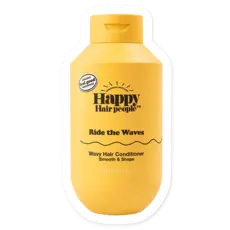
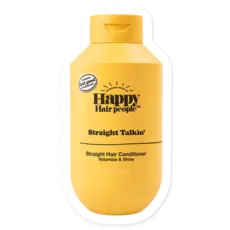
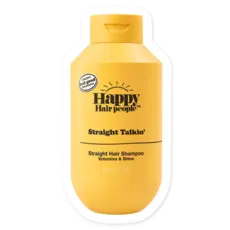
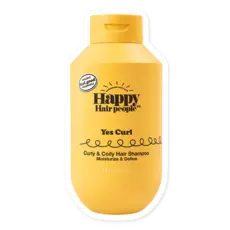
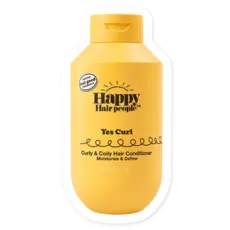
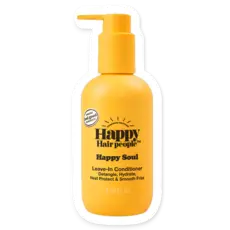
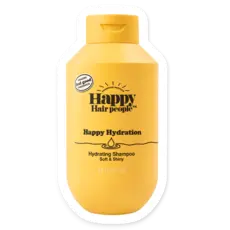
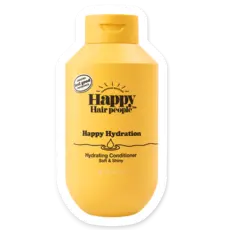
Happy Hair People is a mass‑market haircare brand built around a simple promise: make haircare feel like a small, daily self‑care moment (with a strong focus on fragrance).
If you’re considering their shampoos, conditioners, or styling products for a curly routine, the useful question usually isn’t “is the brand CGM?” — it’s:
- Do the formulas match your routine (Original CGM vs low‑poo vs co‑wash)?
- Are there ingredients in this brand that tend to behave differently depending on how you cleanse?
This page explains the patterns we see in Happy Hair People formulas, and why it still matters to scan the exact product you have.
Happy Hair People products in our database
| Range | Product type | Notes |
|---|---|---|
| Happy Hydration | Shampoo | Current US range |
| Happy Hydration | Conditioner | Current US range |
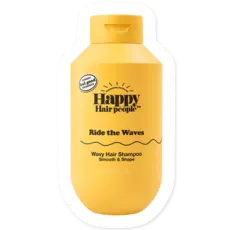
| Ride the Waves | Shampoo | Current range |
| Ride the Waves | Conditioner | Current range |
| Yes Curl | Shampoo | Current range |
| Yes Curl | Conditioner | Current range |
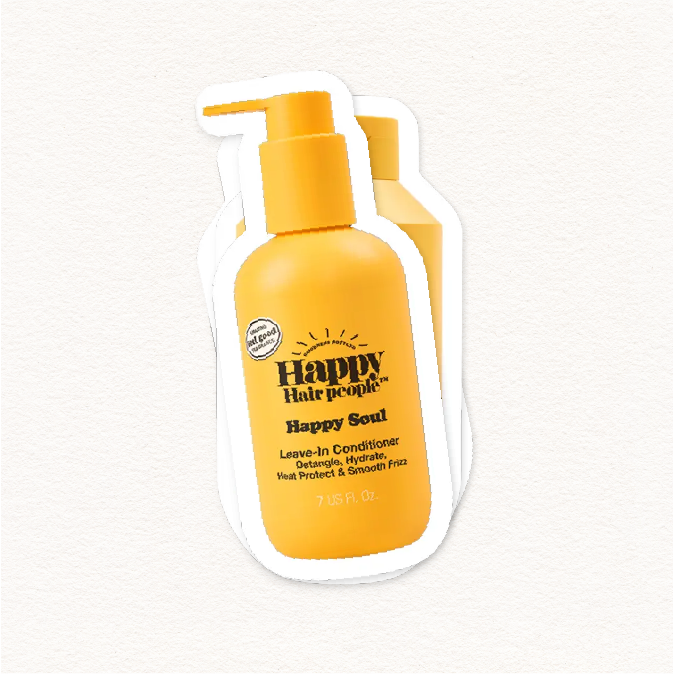
| Happy Soul | Leave‑In Conditioner | Current range |
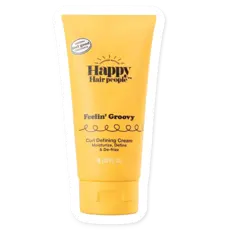
| Feelin’ Groovy | Curl Defining Cream | Current range |
| Straight Talkin’ | Shampoo | Legacy range (US discontinued) |
| Straight Talkin’ | Conditioner | Legacy range (US discontinued) |
Why Happy Hair People is popular (and what it prioritizes)
Happy Hair People is positioned as affordable, widely available haircare (not a salon brand) with a differentiator that’s unusual in this category: the brand puts a lot of emphasis on a “mood‑boosting” fragrance technology.
In the US market, it has been sold through major retailers (including Target), which typically correlates with formulas designed to be simple to use and broadly appealing — but not necessarily consistent across every product.
Ingredient patterns in Happy Hair People formulas
Below are recurring ingredients and formulation choices that show up across their shampoos, conditioners, and stylers.
1. Fragrance + orange peel oil is a signature theme
Many formulas include Citrus Aurantium Dulcis (Orange) Peel Oil plus added fragrance components.
What that means in practice:
- If you’re sensitive to fragrance, this is a brand where it’s worth scanning for fragrance allergens (and patch testing if you’re unsure).
- If you like fragranced products, it helps explain why the brand leans into “self‑care” positioning.
2. Cleansers that can feel “stronger” than some sulfate‑free shampoos
The shampoos commonly use surfactants like Sodium C14‑16 Olefin Sulfonate and Cocamidopropyl Betaine.
Even without sulfates, this combo can feel more cleansing than ultra‑gentle shampoos — which can be a good fit for some routines and scalps, and too stripping for others.
3. Conditioning agents + slip builders (including polyquats)
Conditioners and stylers commonly rely on:
- Fatty alcohols (like cetearyl alcohol, cetyl alcohol)
- Cationic conditioners (like behentrimonium chloride)
- Polyquaterniums (for example polyquaternium‑10 and polyquaternium‑55)
Why this matters:
- These ingredients can improve slip, softness, and curl definition.
- They can also increase the chance of buildup in routines that don’t include enough cleansing to remove them.
Routine notes:
- Low‑poo vs co‑wash: Polyquats and film‑forming ingredients are typically easier to manage when you shampoo (even gently) than when you rely mostly on conditioner‑based cleansing.
4. Oils and butters used as “comfort” ingredients
Across the line you’ll often see ingredients like castor oil, coconut oil, shea butter, and jojoba oil.
This usually signals a “softness and comfort” direction, but the result can vary:
- Some hair types love heavier emollients.
- Others (especially finer textures) may feel weighed down if layering multiple leave‑ins and creams.
Why you can’t assume all Happy Hair People products behave the same
Even when a brand has a consistent positioning, the formulas can still vary in meaningful ways.
Here are common reasons:
- Different goals across ranges: hydration vs definition vs “shape” support often leads to different ingredient choices.
- Formulation updates: ingredients can change over time, especially when brands expand to new retailers or markets.
- Silicones in some products, not others: the brand’s own FAQ indicates that some products contain silicones (and others don’t). In the legacy Straight Talkin’ conditioner, for example, a silicone (dimethicone) appears in the ingredient list.
What this means for routines:
- Original CGM mode (binary rules) may flag some products due to non‑water‑soluble silicones.
- Low‑poo may treat silicones and film‑formers differently depending on removability and your wash frequency.
- Co‑wash tends to be the most sensitive to accumulation, because “removal power” is lower without shampoo.
How to check your specific Happy Hair People product
If you want to know whether your specific bottle fits your routine, scan it in Bönpello.
Scanning is especially useful for this brand because it can quickly surface:
- Film‑formers (including polyquats) that may behave differently in low‑poo vs co‑wash
- Silicone presence in certain conditioners
- How “cleansing‑leaning” a shampoo may be, even when it’s sulfate‑free
To understand why results differ by routine, it also helps to read:
Neutral takeaway
Happy Hair People is a fragrance‑forward, widely available brand with formulas that often combine:
- sulfate‑free (but sometimes still strong) cleansing systems,
- conditioning polymers and emollients for slip and softness,
- and a few routine‑sensitive ingredients (like polyquats and, in some products, silicones).
Whether a specific product works well depends on your routine and how you cleanse — so treat the brand as a starting point, and verify the exact formula you’re using.