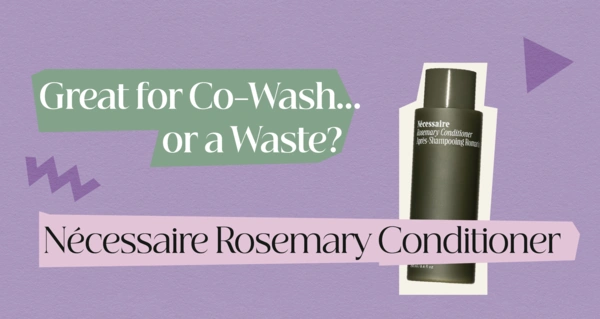
Nécessaire Rosemary Conditioner Analysis: Is it Co-Wash or Low-Poo Approved?
Routine Verdict: At a Glance
- Co-Wash: ✅ Approved — Role: First Conditioner (Mechanical Cleanser). Suitable for conditioning-first co-washing where cleansing happens through scalp massage and rinsing rather than detergents.
- Low-Poo: ✅ Approved — Role: Second Conditioner (Treatment). Suitable as a reparative step after a mild shampoo.
- General CGM: ✅ Approved — 100% silicone, sulfate, and wax-free. — very nourishing (lots of proteins, ceramides, peptides); best for dry/high-porosity hair, but can be too protein-rich or expensive for some users.
- Best For: High-porosity curls, dry/itchy scalps, and structural repair.
- Avoid If: You are protein-sensitive, have very low porosity hair that reacts badly to heavy treatments or very fine hair that weighs down easily, or you want a budget co-wash (this product is premium — may feel like a waste for light needs).
The Wash Day Test: Experience & Texture
Routine context: Tested as a first conditioner for a co-wash routine on 3A/3B density, medium porosity curls, indoors at ~50% humidity. Physical feedback: Immediately noticeable slip (easy detangling) thanks to Behentrimonium Methosulfate and fatty alcohols; texture is creamy but not greasy, spreads easily; light herbal/rosemary scent. After rinsing lightly, hair felt hydrated, clump definition improved, and frizz reduced. In follow-up styling with a light gel, hold and definition were solid. On low-porosity strands the product can feel heavier and may sit on the cuticle if not rinsed well.
Is Nécessaire Rosemary Conditioner good for Co-Washing?
Short answer: Yes — it can be used as a first conditioner in a co-wash routine, especially if the goal is detangling and hydration rather than clarifying. Why: The formula emphasizes conditioning, emollient, and film-forming ingredients and does not rely on cleansing surfactants. This makes it compatible with co-washing through mechanical cleansing, where scalp massage and water help remove dirt and sebum without stripping the hair.
Technical → Plain language:
- Behentrimonium Methosulfate — meaning excellent slip and detangling without heavy residue when rinsed correctly.
- Cetearyl Alcohol & Glyceryl Stearate — meaning stability and creaminess (they help the conditioner feel rich and spreadable).
- Hydrolyzed Proteins (jojoba, rice, pea, quinoa, vegetable) — meaning temporary strengthening and smoother cuticle, but they also add protein load.
- Ceramides (AP/AG/EOP/NP/NG) — meaning repair and barrier support for porous, damaged hair.
- Sodium Hyaluronate & Panthenol — meaning humectant hydration and improved elasticity.
Scalp, Skinification & Peptides — The Deep Dive
- Acetyl Tetrapeptide-3 — meaning a cosmetic peptide that may support scalp health and hair strength; it's a targeted active rather than filler.
- Niacinamide — meaning scalp circulation and barrier support, especially helpful if dryness or flakiness is present.
- Ceramides + Cholesterol + Fatty Acids (linoleic/linolenic) — this is a skin-like repair complex (similar to skincare “skinification” benefits) that restores lipid structure in the hair fiber and cuticle.
What it does not contain: There are no heavy silicones or sulfates listed, so this is not a build-up heavy formula in the classic silicone+sulfate sense. However, the abundance of proteins, oils (coconut, avocado), quats, and richer lipids means it behaves like a treatment rather than a lightweight daily co-wash, and may still accumulate with frequent use despite being silicone-free.
Cost vs. Value — When using it as a first conditioner is a waste
This product reads like a high-end reparative conditioner. For users who only need light cleansing + minimal conditioning (e.g., fine, low-porosity hair or users who co-wash daily), using a treatment-grade product as the everyday first step can be overkill — a desperdicio (waste) in both product and money. Practical guidance:
- If your routine needs are simple (refresh + light detangle), choose a lighter, less expensive co-wash conditioner.
- If your hair is dry, porous, heat-damaged, or you want visible repair, investing this as a first conditioner makes sense — you’ll use less styling product later and may reduce heat work, balancing cost.
How to use this for your Hair Type
If you follow a Co-Wash Routine (Cleansing with Conditioner) as first conditioner
- Apply a generous amount to the roots and lengths.
- Gently massage the scalp for 3–5 minutes to loosen sebum and dirt. This "dwell time" allows better contact time between scalp and actives like rosemary extract and peptides while the surfactants lift debris.
- Finger-comb or use a wide-tooth comb to detangle.
- Rinse thoroughly if your hair is low-porosity; rinse lightly if you want leave-in benefit, then follow with a lighter styling product.
If you follow a Low-Poo Routine (Cleansing with a mild Shampoo) In this routine, this product acts as your Second Conditioner (Treatment).
- Wash with a sulfate-free shampoo first.
- Apply from mid-lengths to ends.
- Leave on for 2–3 minutes to allow the proteins to fill the hair cuticle before rinsing.
For High Porosity / Damaged Hair: Use weekly or biweekly as a reparative first conditioner — leave 3–5 minutes before rinsing for proteins/ceramides to act. Follow with a light leave-in.
For Low Porosity / Fine Hair: Use sparingly; dilute with a little water in the palm, apply mainly to mid-lengths and ends, and rinse thoroughly to avoid heaviness.
Protein-sensitive hair: Rotate with protein-free conditioners. Because this formula has multiple hydrolyzed proteins, frequent exclusive use can lead to stiffness or reduced elasticity for protein-sensitive strands.
FAQ
Q: Will this remove heavy silicone buildup? A: No — this is not a clarifying cleanser. If you have heavy silicone or product buildup, use a clarifying shampoo or a targeted clarifying step before returning to co-washing.
Q: Can I use this every wash as a co-wash? A: It depends on hair needs. For dry/high-porosity hair, yes (or alternate with a lighter conditioner). For fine or low-porosity hair, use less frequently to avoid heaviness.
Q: Is the fragrance a CGM problem? A: Fragrance is allowed in CGM guidelines but can irritate sensitive scalps. Patch test if you’re sensitive.
Q: Will this cause protein overload? A: It can, especially if used frequently on protein-sensitive or already healthy hair. Rotate with protein-free conditioners to maintain balance.
Q: Is it a waste to use this as a co-wash? A: It is only a waste if your hair is healthy. For damaged or thinning hair, the scalp massage provides the necessary contact time for the peptides to work.
Sources & Authority
Final note — short version for skimmers
Verdict: Good Co-Wash / Low-Poo candidate — especially for dry, porous, or damaged curls. But because it’s rich and premium, using it as your daily first conditioner can be a waste for lighter hair needs. Use it as a treatment/co-wash on repair days or dilute/limit for daily use.